The Board Game
Lead your Arcology. Survive the Desert. Reach the Gates.
You Do Not Conquer Zarkath. You Endure It.
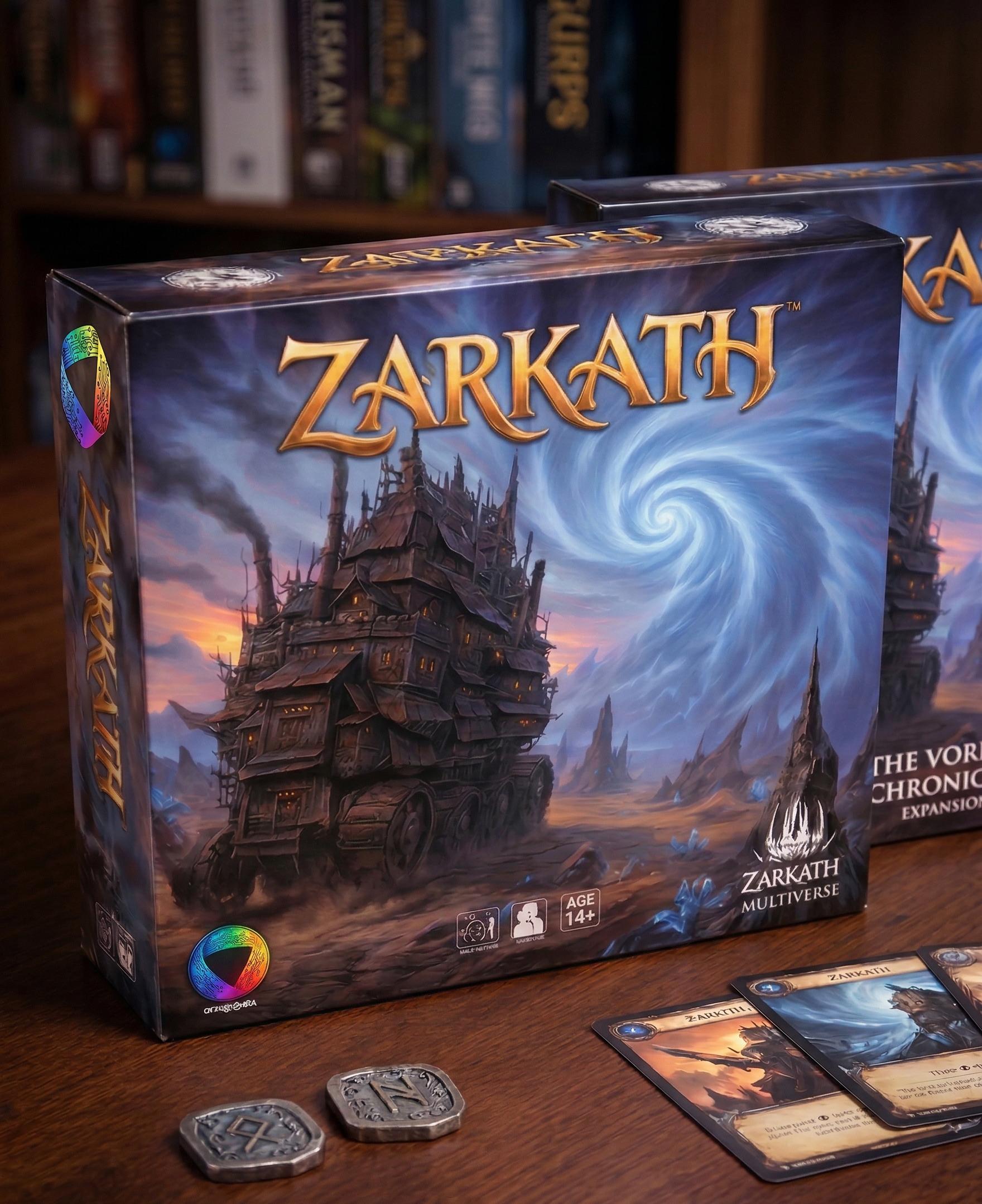
Zarkath is a survival board game for 1–6 players. Each player controls a massive, mobile city — an Arcology — carrying a Crew of four specialists across shifting desert terrain.
You must manage Plasma (fuel), Supplies, Morale, Hull Integrity, and Resonance while navigating 22 unique locations, surviving enemy encounters, and enduring the roaming existential threat of the Yellow King.
The goal: reach and enter the City of Zarkath at the board's center before your Arcology is destroyed — by damage, despair, or the corruption spreading from the King's passing.
The Turn Structure
Each turn follows nine sequential phases. The board rewards preparation and punishes complacency — every turn matters.
Flip the cycle token. Day abilities unlock different options than Night — timing matters.
Move your Arcology 1–2 hexes. Each ring (Outer, Middle, Inner) escalates in danger and reward.
Resolve the hex you occupy. 22 unique location types — from Crystal Fields to Temple of Cosmic Horrors.
Assign Crew. Build Settlements. Recruit. Trade. Use Resonance Interventions to bend the rules of reality.
Draw an Event card. The desert is never static — storms, ambushes, and cosmic disturbances arrive without warning.
If enemies are present, resolve up to 4 rounds of combat. Your Crew's Scars accumulate — and there's no easy healing.
Collect from Settlements. Pay upkeep. Falling to zero Supplies triggers Mutiny — your own Crew turns against you.
If Morale hits zero before Supplies: Mutiny. Your Captain must hold the crew together — or the game ends here.
Your Crew Is Everything
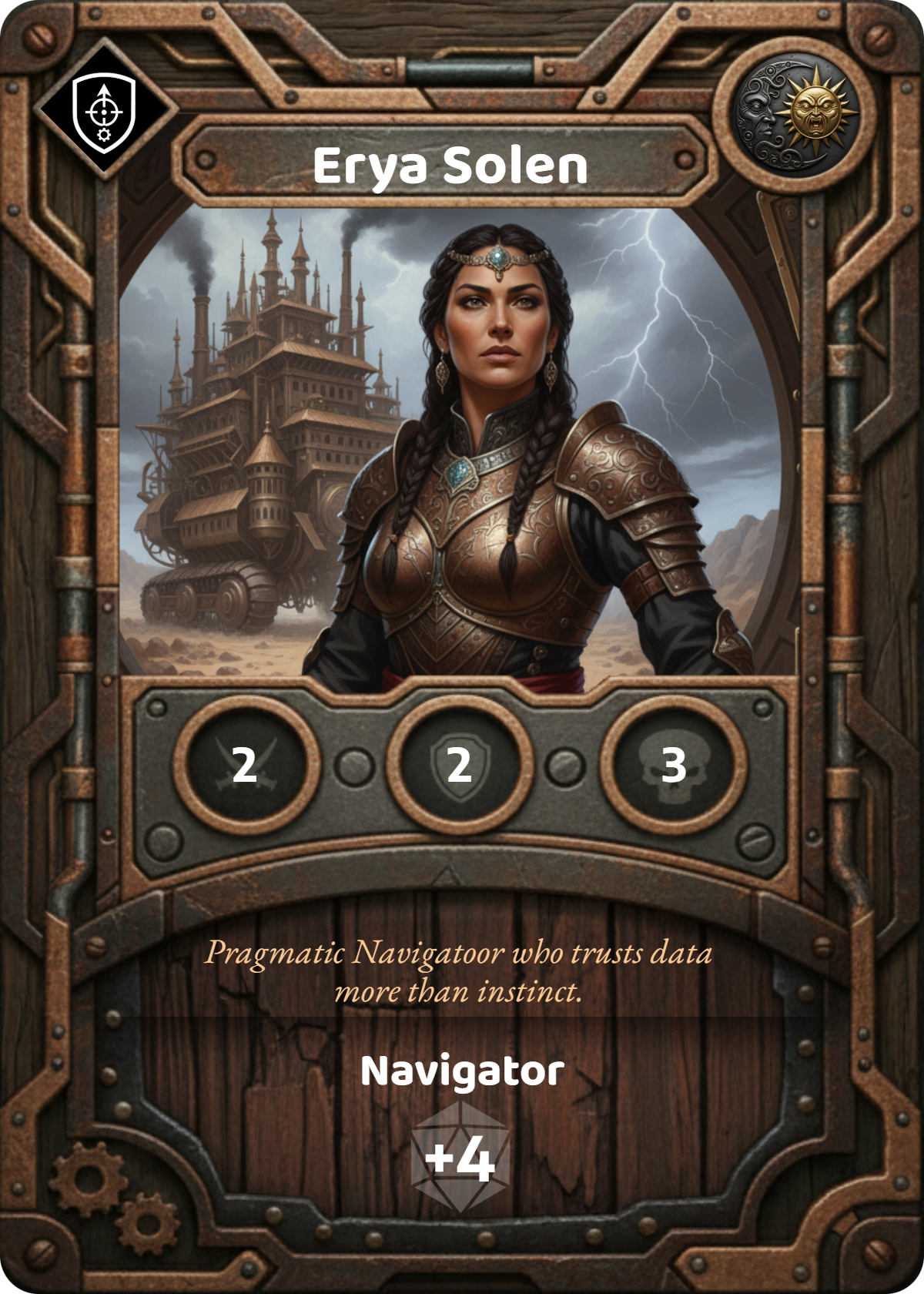
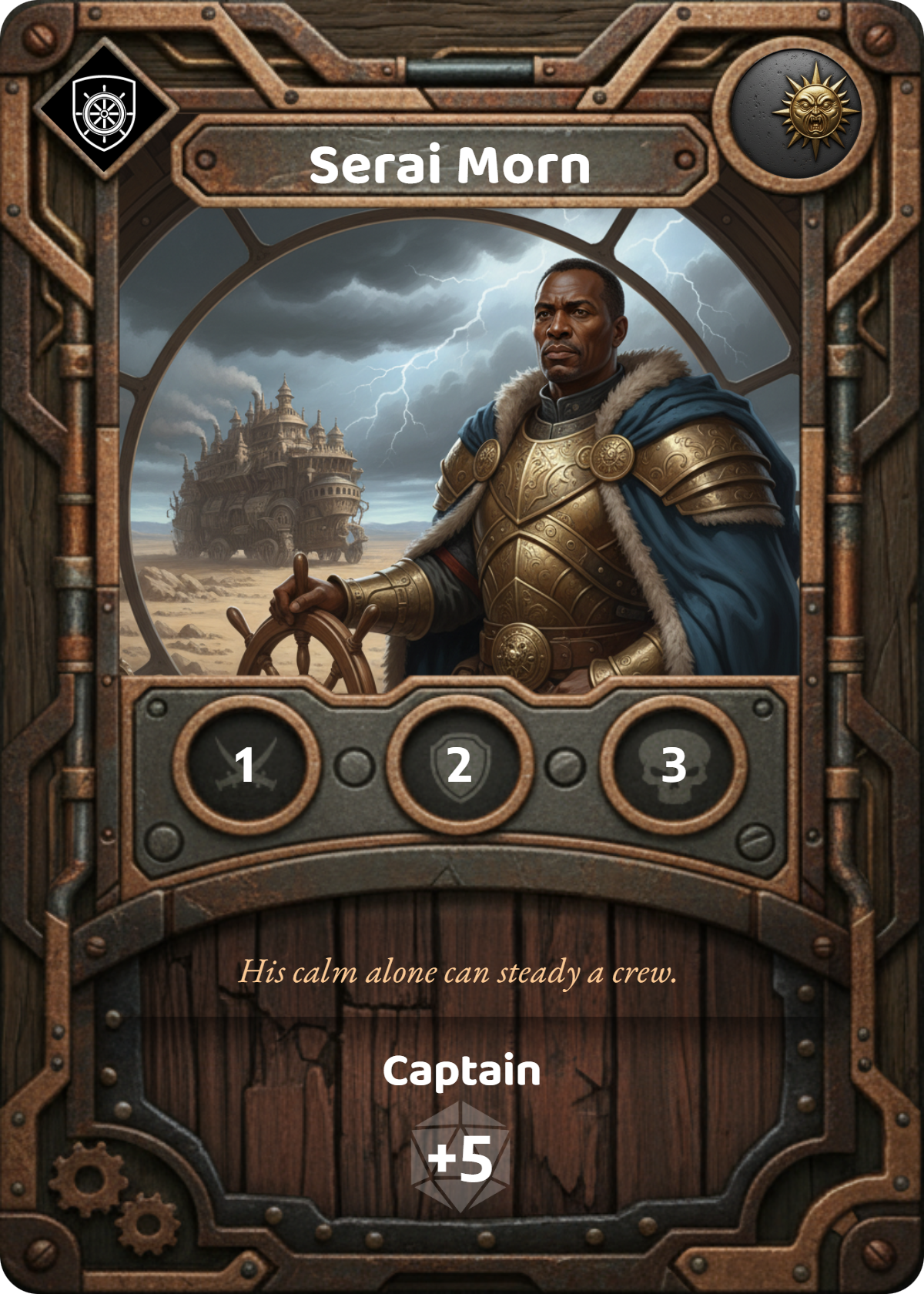
Before the desert begins, you draft a Crew of four specialists. A valid Crew requires exactly one Captain and at least one Specialist. Choose carefully — Crew members who die are gone forever.
Decision-maker and the Arcology's anchor. Required for a valid Crew. If the Captain is Lost during a Mutiny, the Arcology collapses — the game ends immediately.
Navigators, Security Officers, Resonance Officers — each is highly efficient in one domain. At least one is required at game start.
Versatile and adaptable. No single specialization, but extraordinary flexibility across multiple situations. The glue that holds a Crew together.
The Draft
Crew selection happens before board setup. Each player receives 6 cards, secretly keeps 2, passes the rest. Then keeps 2 more from received cards. The result: exactly 4 Crew, shaped by competition and anticipation.
"Your Crew is not just a set of stats. They are the people you are leading into the end of the world. Some of them won't come back."
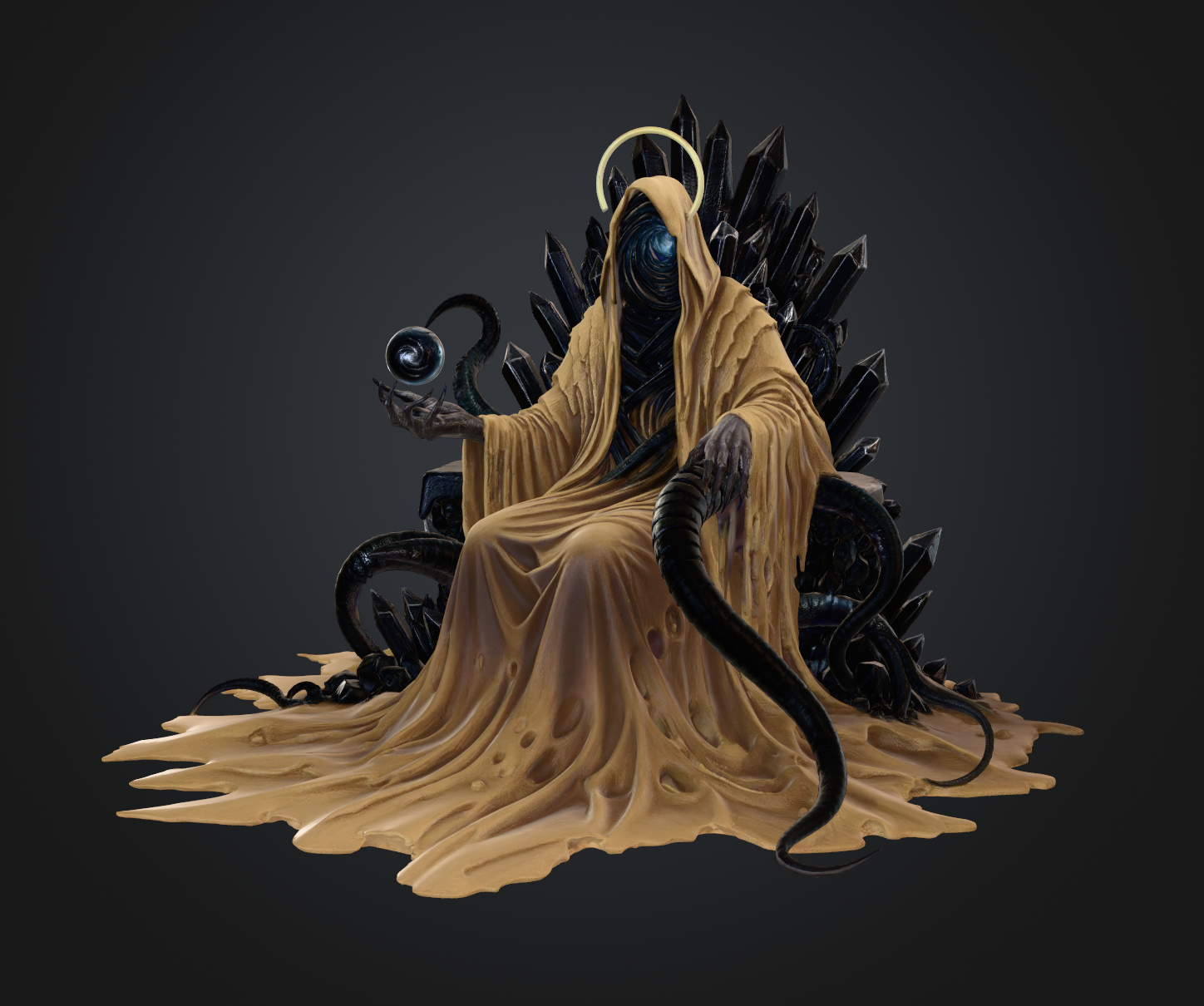
The Yellow King
The Yellow King is a roaming adversarial presence on the board — not controlled by any player, not moved by Event cards. He moves one hex at the end of every turn, and his adjacent hexes become Corrupted Zones.
Entering a Corrupted Zone costs Morale and triggers a roll on the Corruption Table — effects range from resource loss to immediate crew casualties to accelerated Mutiny checks.
Worse: if the Yellow King is within 2 hexes when you attempt entry to Zarkath, you roll twice and take the lower result.
"The Yellow King does not chase you. He wanders. But the desert is not large enough for you both."
What's in the Box
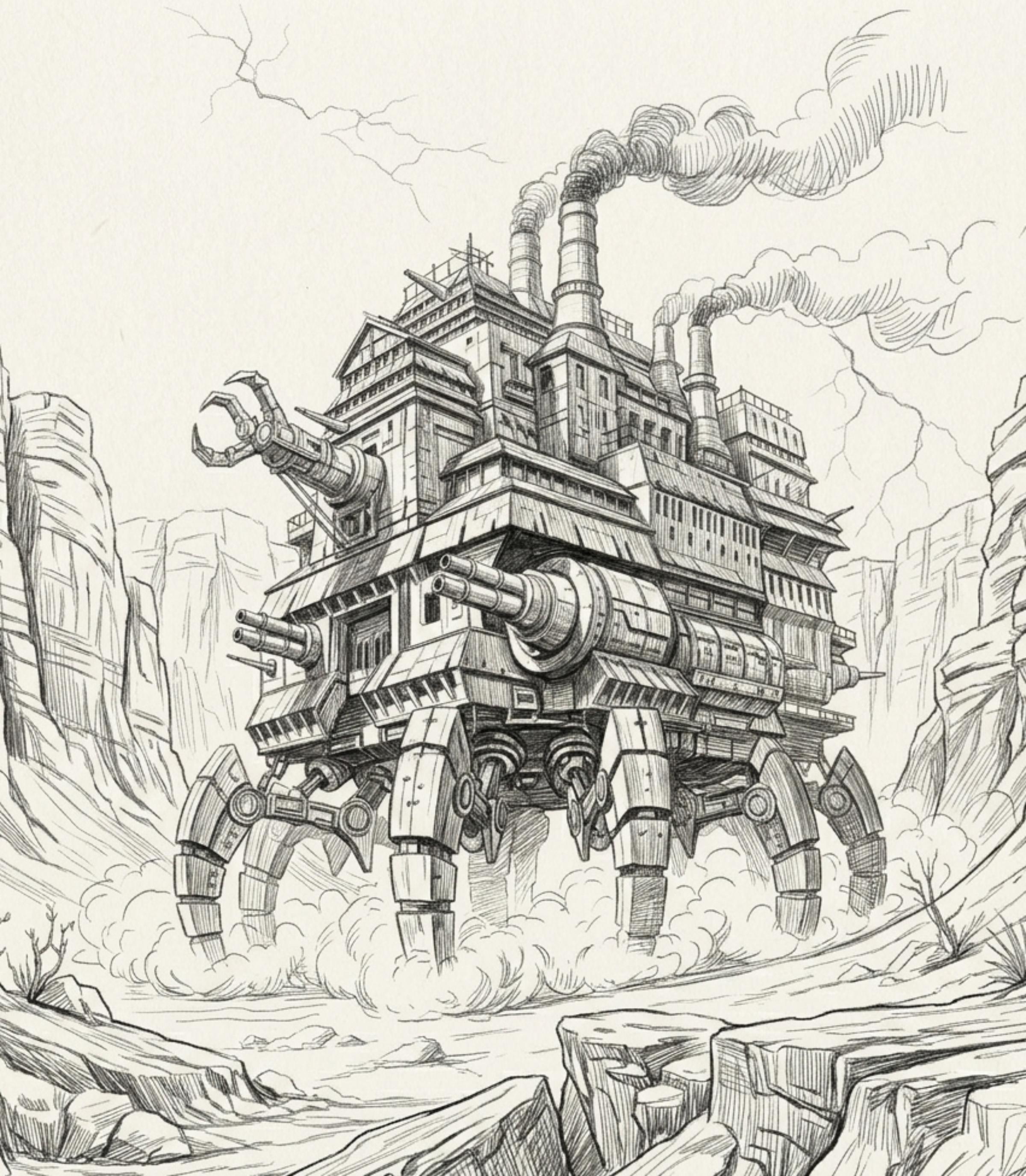
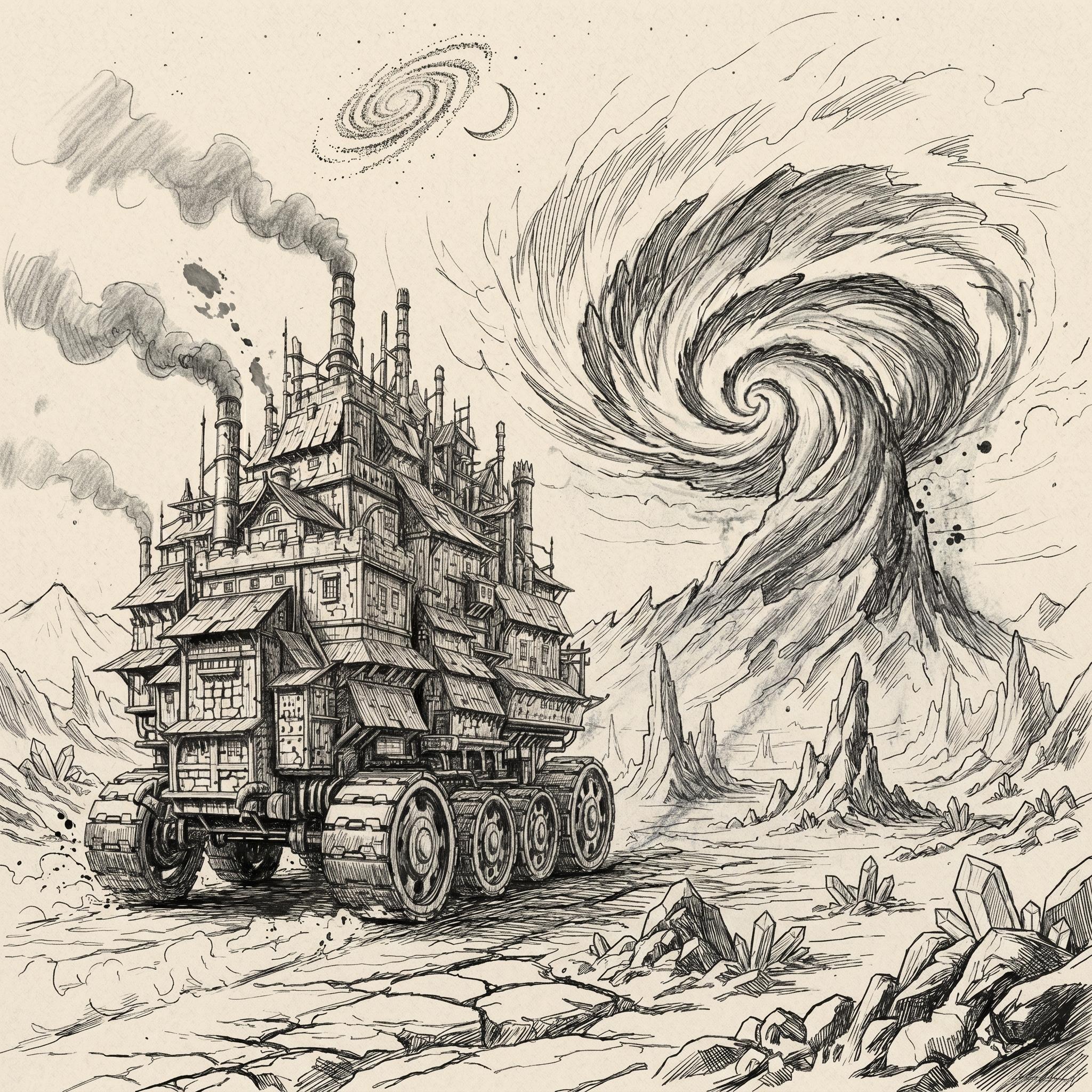
Three rings of difficulty — Outer, Middle, Inner — building out from the Gates of Zarkath at the centre. Each game, a new layout.
Crew cards, Enemy decks (Easy / Intermediate / Hard by ring), Event deck, Location deck, and Loot deck — each with unique art and effects.
Corruption tokens, Scar tokens, Mutiny token, Settlement buildings, and full resource trackers for Plasma, Supplies, Morale, Hull, and Resonance.
Entering the City of Zarkath
Reaching the Gates is not enough. You must meet at least three of six conditions — Resonance, Morale, Crew count, Hull, a Silver Key, Crew health — then spend a Supply and roll 1d20 on the Final Trial table.
Roll a 20: The Gates Open. Automatic victory. Roll a 1: Collapse of Conviction. Hull −2, Morale −2. The dream pushes you back.
"The Gates of Zarkath do not measure strength. They measure something else entirely. Those who have stood before them and turned back could not say why."